



This post is in partnership with Perelel. I only endorse products I believe in and personally use.
If you’re in your late 30’s or early 40’s and starting to feel off, you’re not imagining it. A few weeks ago, I was at a wine bar with a group of friends. The kind of night where we let the dads handle bedtime and ordered “just one more” to make sure the kids were asleep by the time we got home.
A few of my friends, mostly in their early 40s, started venting about how off they’d been feeling lately: waking up at 3am every night and can’t fall back asleep, irregular periods, constantly feeling in a fog.
Then someone said it, “Could this be perimenopause?”
Cue the collective pause. But that question stuck with me. So of course, I had to dig in because if this is what’s on my horizon, I want to understand it now, not five years too late. I spoke with Dr. Banafsheh Bayati, MD, OB/GYN, FACOG, Perelel’s Medical Co-Founder and one of the visionaries behind Perelel’s Perimenopause Support Pack. (get 20% off with code NMM20)

1. What is perimenopause, exactly?
Perimenopause is the transitional phase leading up to menopause, when your hormones start to fluctuate and your body begins preparing for the end of your reproductive years. You may still get a regular period, or not. You might feel totally fine, or… not.
According to Dr. Bayati, the first signs are often subtle shifts in your menstrual cycle: earlier, later, heavier, lighter, or just different.
2. When does perimenopause begin?
For some women, it starts in their mid-thirties. For most, changes pick up in closer to 45. It can last anywhere from a couple of years to close to a decade before menopause officially begins around age 55. You can’t stop or delay it, but you can support your body through it. And that’s what I care about.
Common Symptoms
Not everyone experiences symptoms, but many do. Some of the most common:
- Sleep disruptions (like waking up at 3am)
- Mood swings or increased anxiety
- Brain fog
- PMS that feels stronger or less predictable
- Night sweats or hot flashes
- Changes in libido
- Vaginal dryness or discomfort during sex
- Fatigue, joint pain, or weight fluctuations
- Skin or hair changes
Symptoms can change from month to month. Some days you may feel totally normal, and others…not so much. That unpredictability is part of what makes this phase confusing. Even if your cycle is still regular, these can be early signs your hormones are shifting.
3. Can you still get pregnant?
Yes. (This surprised me too.) Ovulation becomes less predictable, but it doesn’t stop completely. If you're trying to conceive, or trying not to, this phase requires some intentional planning.
If you’re trying to get pregnant during this time, supporting your overall health becomes especially important to help your body function as optimally as possible during hormonal fluctuations and improve your chances of conception and a healthy pregnancy, especially if you're going through IVF.
4. What actually helps alleviate symptoms?
I asked Dr. Bayati what we can do to feel better and support our bodies proactively. Her advice was refreshingly realistic:
- Eat balanced, nutrient-rich meals
- Move your body regularly (no, it doesn’t have to be a HIIT class)
- Get serious about sleep hygiene
- Reduce stress where you can, even in small ways
- Stay connected to community, talk to friends, find support
- Hydrate (yes, this actually matters)
And if symptoms are affecting your quality of life, supplements can help too.
5. What role can supplements, like Perelel’s Perimenopause Support Pack, play in improving this season of life?
Supplements aren’t magic pills, but the right ones can play a powerful role in supporting your body through hormonal transitions. Targeted nutritional support can help fill in gaps, stabilize what’s fluctuating, and make the whole experience feel less disruptive.
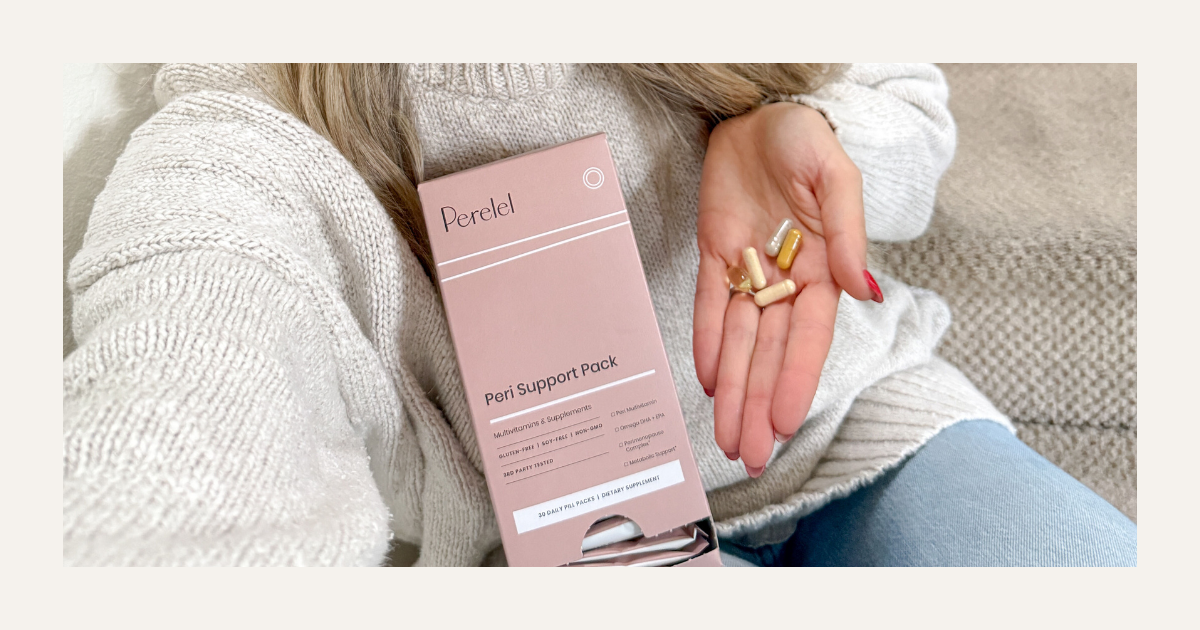
As the token over-researcher of my friend group, I’ve done a deep dive into what’s actually out there and Perelel’s Perimenopause Support Pack stands out because it was developed by OB/GYNs specifically for this season of life. It’s comprehensive, thoughtfully formulated, and rooted in what women actually need, not just what looks trendy on a label.
Here’s what’s inside and how it can help:
- Perimenopause Multivitamin: Foundational nutrients like vitamins A, C, D, E, and CoQ10 to support immune health, energy, skin, and mood.
- Perimenopause Complex: Targets healthy estrogen metabolism and supports common symptoms of perimenopause
- Omega DHA + EPA: Essential fatty acids to support brain, eye, and cardiovascular health.
- Metabolic Support: A blend of L-carnitine, L-tartrate, green tea extract, and berberine to support healthy blood sugar and metabolism and a healthy inflammatory response.. This is key for many women who notice weight shifts or energy dips during this phase.
While I’m not taking it yet (I’m currently on Perelel’s Mom Multi Pack), it’s the first thing I’m recommending to my friends after my chat with Dr. Bayati.
I highly recommend Perelel's Perimenopause Support Pack.
If you’re in your late 30s or early 40s and starting to notice some shifts, this is a smart place to start. Because the earlier we understand what’s happening, the better we can support ourselves through it.
✅ OB/GYN and research-backed formultion
✅ Targeted support for perimenopause symptoms
✅ Third-party tested for quality, purity, and safety
✅ Clean Label Project Certified
✅ Convienet, everything is in one pack
Get 20% off your Perelel purchase: NMM20

Author


